 Contraxfinance
: Single-Token and Dual-Token Vault Choices
Contraxfinance distinguishes single-token vaults from dual-token vaults through their listed assets. ETH can fund either kind through supported zaps, so the entry currency alone does not identify the holding. In the documented Arbitrum beta design, the useful comparison combines token format with the underlying strategy.
Token Formats on Arbitrum One
The documented beta design separates single-token and dual-token vaults on Arbitrum One. This classification describes how the application presents the assets used by its vaults. A wallet’s connection method is a separate choice.
How Do Single-Token and Dual-Token Vaults Differ?
A single-token listing presents one named asset, while a dual-token listing presents a pair with exposure to both named assets. The vault type does not follow from the number of coins supplied in the deposit screen. The category also does not describe every lower-level token used by an underlying strategy. The complete pair name identifies both sides of a dual-token position. WETH-USDC and WETH-WBTC share WETH, yet one pairs it with USDC and the other with WBTC. PLS-WETH names another combination. Shortening every such entry to an ETH vault removes a material part of the holding.
Vault Labels and Strategy Platforms
The ETH, rETH and GMX listings have single-token names; WETH-USDC, WETH-WBTC and PLS-WETH name pairs. Their platform families form a separate grouping.
| Documented Vault | Displayed Token Format | Strategy Platform |
|---|---|---|
| ETH | Single token | Hop |
| rETH | Single token | Hop |
| GMX | Single token | GMX |
| WETH-USDC | Dual token | Sushi |
| WETH-WBTC | Dual token | Sushi |
| PLS-WETH | Dual token | Plutus |
Hop supplies the documented ETH and rETH strategy family, while GMX identifies a separate family. The PLS-WETH listing belongs to Plutus despite sharing WETH with the Sushi pairs. These entries establish token labels and platform relationships; their presence does not confirm that every deposit route is currently available.
ETH Entry and Direct LP Handling
ETH zapping and direct token or LP handling describe entry or exit routes. The single-token or dual-token label describes the selected vault’s displayed asset format.
Deposit Routes
ETH Zapping
An ETH zap exchanges the supplied ETH into the assets that the selected vault uses. The documented ETH zapping route covers almost all vaults; availability depends on the selected vault. A dual-token position can therefore begin with ETH without requiring its owner to supply both named pool tokens separately.
Direct Token or LP Handling
The direct route handles the single token or liquidity-pool token, usually shortened to LP token, where the selected vault supports it. A two-token pool name and a single LP token describe different layers. The pair identifies the pool assets; the LP token represents the pool position handled by the direct mode.
Withdrawal Assets
An LP withdrawal returns the pool-position token through the direct mode. After that withdrawal, the documented route back to ETH requires redepositing the LP through the same mode first. An ETH exit and an LP exit consequently need different handling, even when the vault name stays unchanged.
External Web3 wallets require transaction confirmation for supported deposits and withdrawals. Approval prompts authorize the selected operation; their presence does not change the vault’s token category.
Pool Exposure Behind a Single-Token Label
A single-token listing can have an underlying strategy with liquidity-pool components.
The published
StrategyHopWeth
implementation identifies a Hop liquidity-pool token.
Its constructor also supplies pool and token parameters to a shared strategy base.
The displayed label does not inventory all the underlying pool machinery. The presence of an LP token, by itself, does not establish that the application classifies a vault as dual token.
Strategy Names and Contract Roles
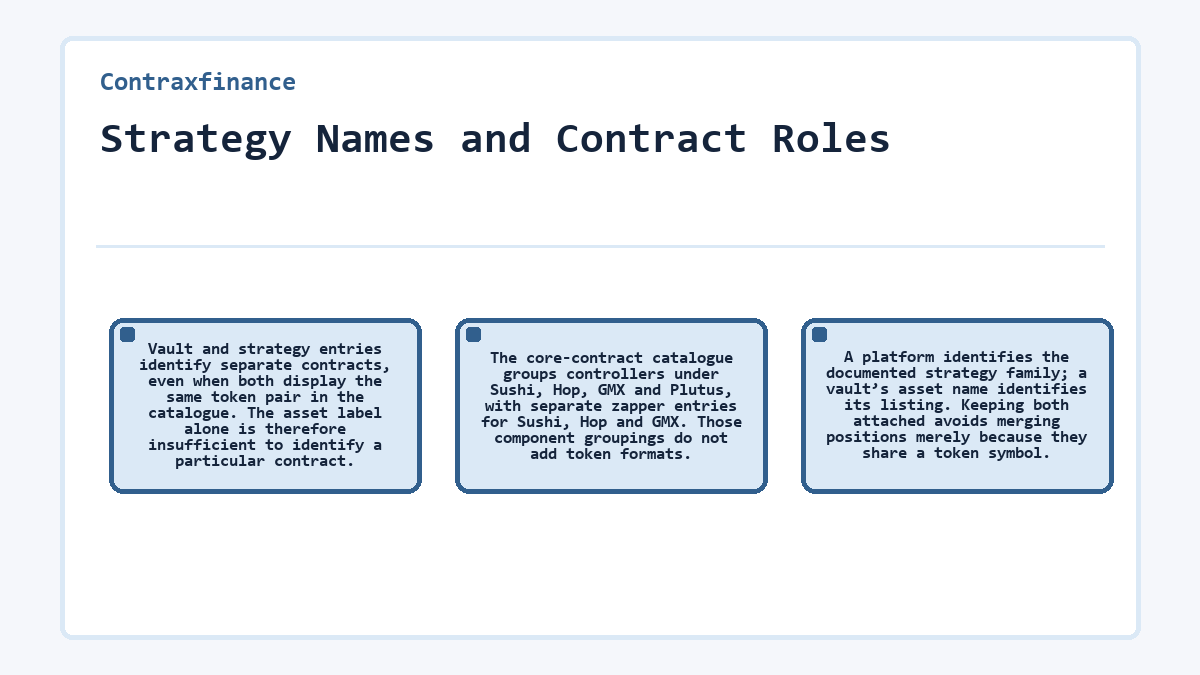
Vault and strategy entries identify separate contracts, even when both display the same token pair in the catalogue. The asset label alone is therefore insufficient to identify a particular contract.
The core-contract catalogue groups controllers under Sushi, Hop, GMX and Plutus, with separate zapper entries for Sushi, Hop and GMX. Those component groupings do not add token formats. A platform identifies the documented strategy family; a vault’s asset name identifies its listing. Keeping both attached avoids merging positions merely because they share a token symbol.
Token Growth and Dollar Value
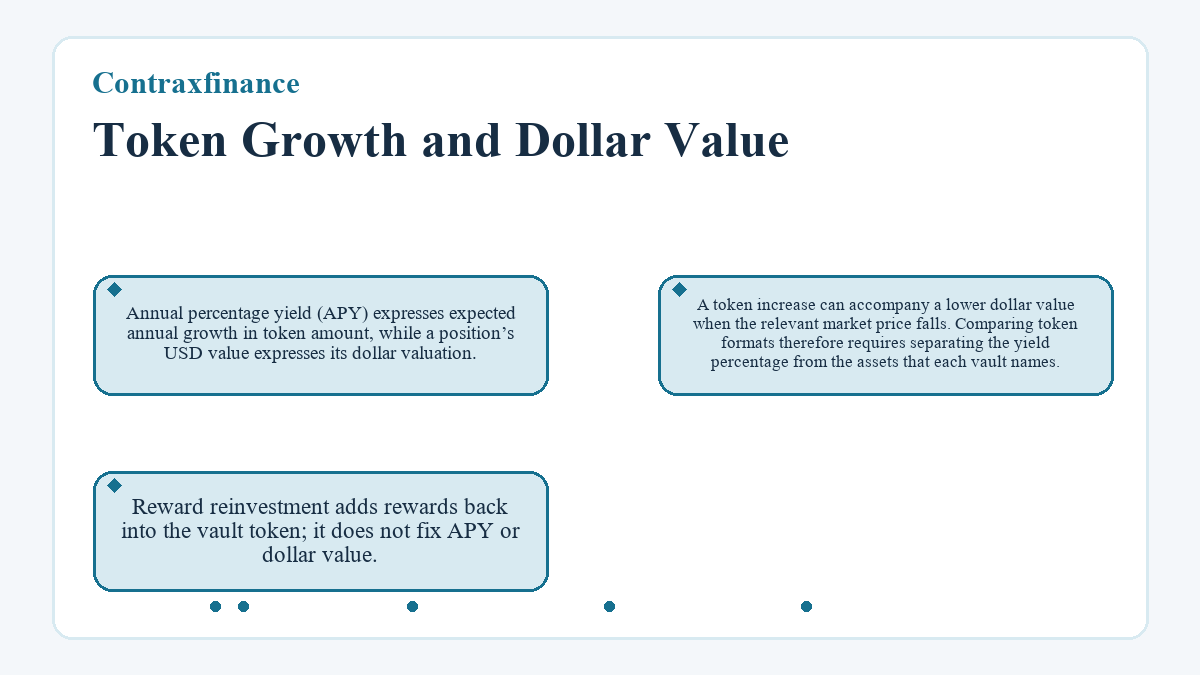
Annual percentage yield (APY) expresses expected annual growth in token amount, while a position’s USD value expresses its dollar valuation. A token increase can accompany a lower dollar value when the relevant market price falls. Comparing token formats therefore requires separating the yield percentage from the assets that each vault names. Reward reinvestment adds rewards back into the vault token; it does not fix APY or dollar value.
Position Details and Balance Changes
The position details distinguish staked and unstaked amounts, vault total value locked (TVL) and pool share. These fields describe the position or pool, rather than another token category. Read balance changes alongside the named holding. A change in its reported USD value does not, by itself, change a Sushi WETH-USDC position into a different asset pair.
Frequently asked questions
Which Sushi Pairs Extend Beyond WETH-USDC and WETH-WBTC?
The documented Sushi range also includes WETH-DAI, WETH-USDT, WETH-MAGIC, WETH-SUSHI, WETH-DPX and WETH-RDPX. Each name identifies a different paired asset alongside WETH. These are catalogue entries, so the list describes documented combinations without establishing that each currently accepts deposits.
Are ETH and WETH Identical Token Labels in Vault Names?
ETH and WETH identify different asset forms, with WETH meaning wrapped ETH. The catalogue uses ETH for a Hop listing and WETH within several pair names. Preserve that distinction when reading a selected vault; an ETH entry route does not replace WETH with ETH in its underlying pair name.
Do Several Wallet Approvals Indicate a Dual-Token Vault?
An operation through an external Web3 wallet can require up to three approvals in the documented interface. That describes wallet authorization, not a count of the assets in the selected vault. The number of prompts therefore does not distinguish a single-token position from a dual-token position.
Does the single-token Label Certify a vault’s Safety?
The single-token label describes the displayed asset format and supplies no safety certification. It leaves separate questions about the vault contract and the strategy beneath it. Comparing that label with a dual-token label establishes a composition distinction, without ranking either strategy’s smart-contract protection.
Did the Beta TRAX Proposal Define Another Vault Type?
The beta TRAX proposal concerned governance, a DAO and a possible airdrop, rather than a single-token or dual-token category. It described plans whose structure remained under development in that proposal. A proposed governance token does not identify the underlying assets of an individual vault.